
Obacht – Individual flood prevention
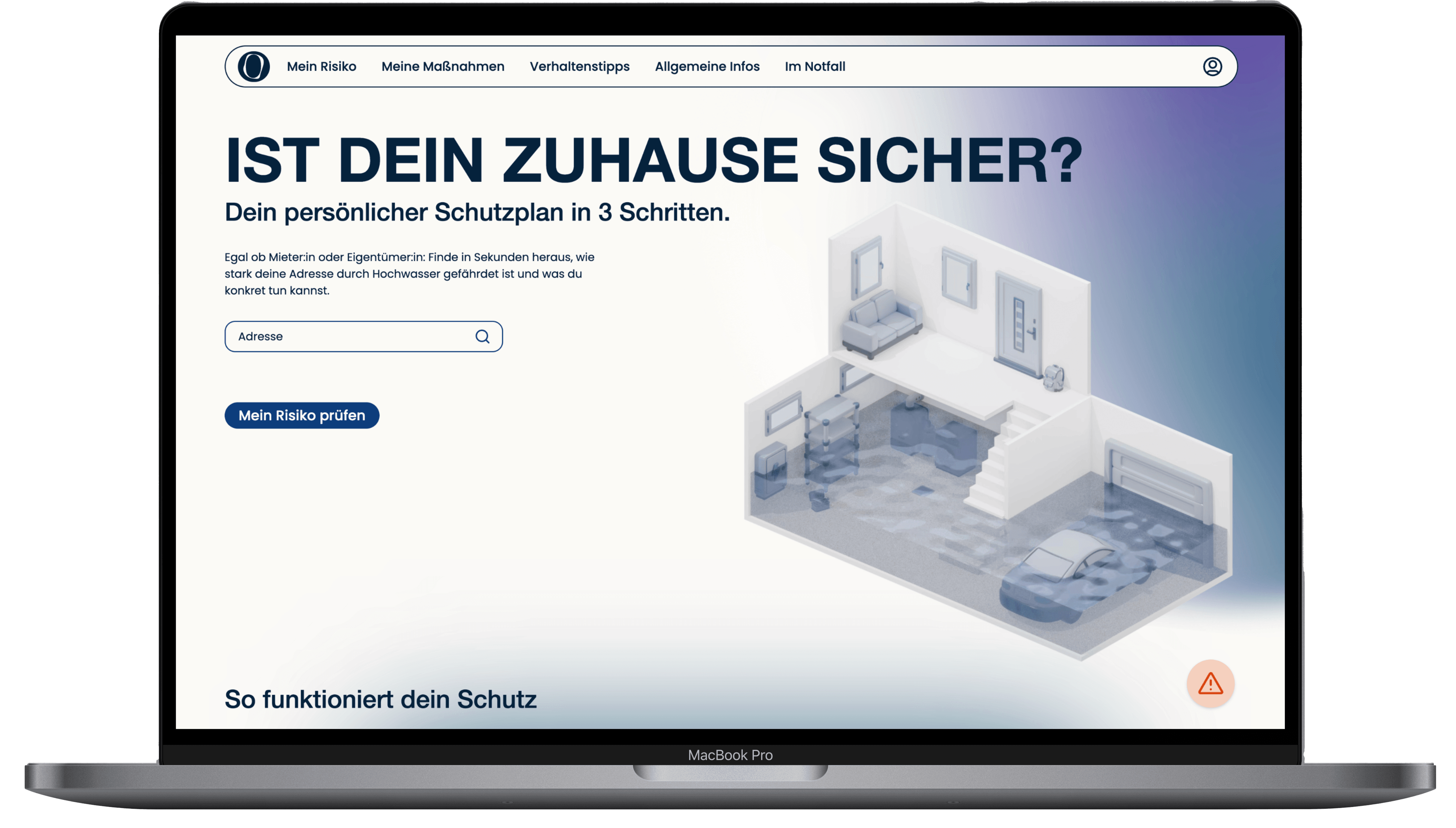
Obacht is a digital platform that aims to bridge the gap between abstract flood data and protecting individual homes. By turning regional flood warnings into local, address-based risk analyses, the platform helps people understand their specific vulnerabilities and take proactive, concrete steps before a crisis hits.
My Role
UI/UX Design
Wireframing
The Problem
Despite the increasing frequency of extreme weather events in Germany, current flood communication remains too technical and distant. Existing risk maps are often difficult for laypeople to find and are technically complex. There are too many measures, which overwhelms people and leaves them unsure which ones are helpful for their individual situations. The challenge was: How can we make an invisible, abstract threat so personal that people take action without being paralyzed by fear or feeling overwhelmed?
Insights
During the research phase, we found that users are desensitized to regional “danger zones” but respond very well to location-specific information.
The visualization barrier: Users have difficulty translating regional water levels to their own property, e.g., “What does 1.5 m mean for my basement?”
Cognitive paralysis: Overwhelming technical data leads to “analysis paralysis.” Without a clear starting point, users tend to do nothing.
The power of familiarity: Motivation for prevention is greatest when the threat is presented in a familiar context rather than just on a general regional map.
Design Intent
Our strategy focused on replacing abstract fears with radical simplicity and concrete courses of action. We translated our findings into a “digital twin” interface approach:
Relevant 3D scenarios: A 3D model of the house type functions as a digital twin that makes the risk concrete. This allows users to “see” the impact on their own living situation, making the threat no longer threatening, but real.
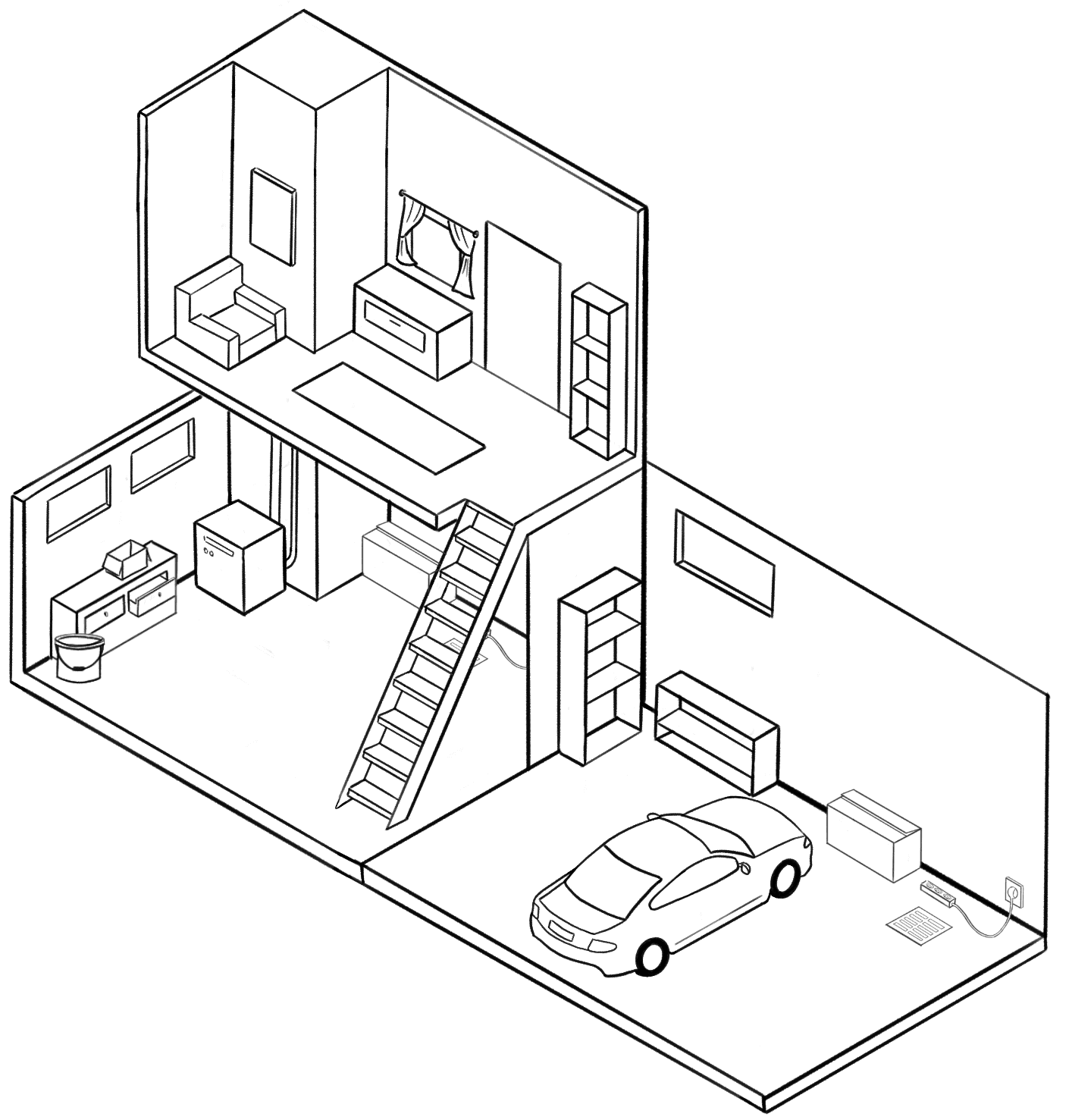
Dynamic logic filtering: To reduce cognitive load, we developed a questionnaire-based logic that filters out irrelevant data and displays only the prevention measures that are relevant to the user's specific address and building type.
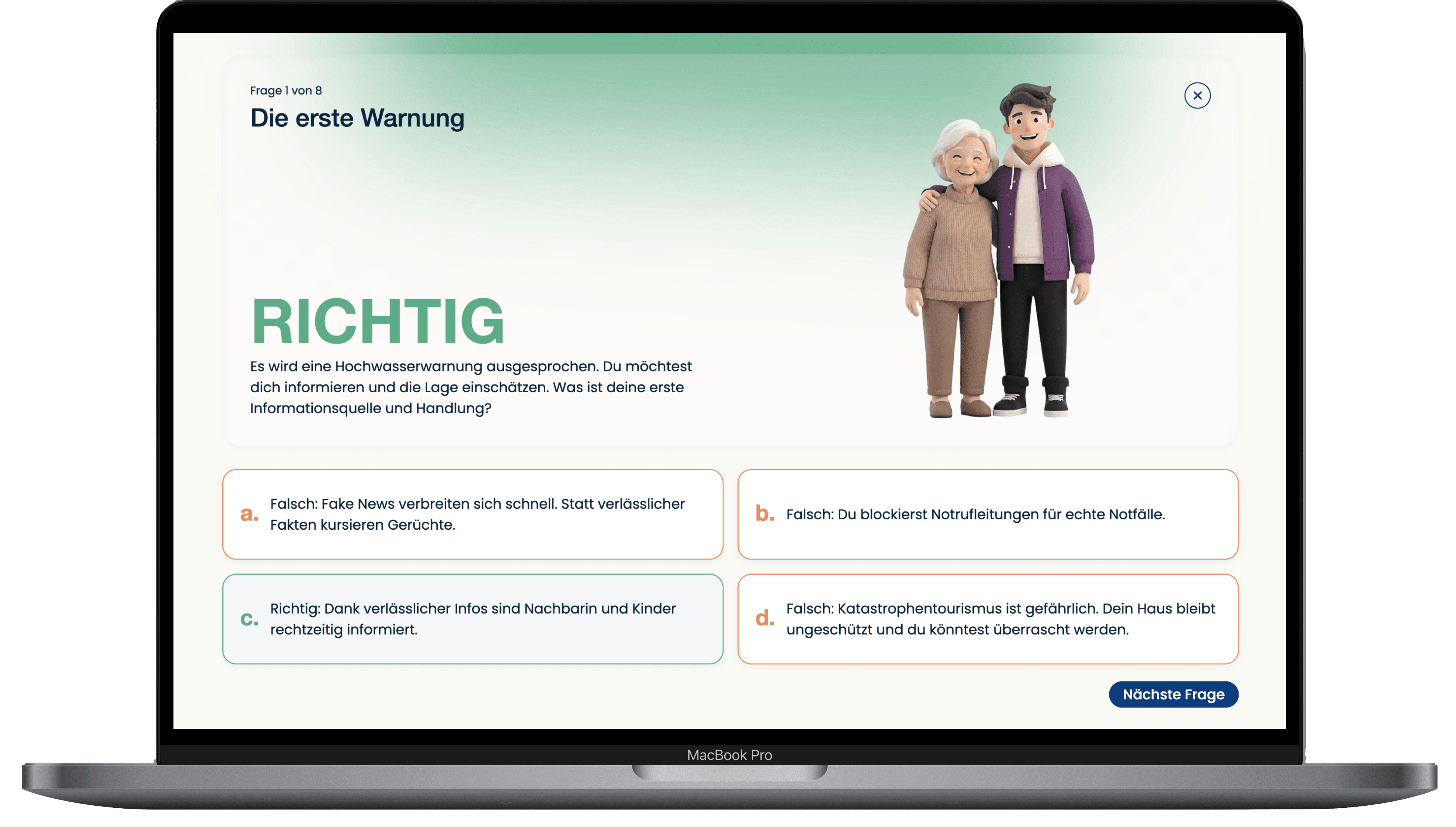
Behavioral nudges: The user interface shifts the focus from the disaster itself to the solution and breaks down complex prevention measures into small, manageable steps.


Product & Impact
With “Obacht,” people can understand their individual risk at their home and take preventive measures before the flood hits. To do this, after entering their address and answering specific questions, the app generates a digital twin model of the home and uses an integrated database to create a personalized emergency plan. Here, design serves as a bridge between data, knowledge, and the ability to act—a bridge that cannot prevent natural disasters but can mitigate damage through preventive recommendations.
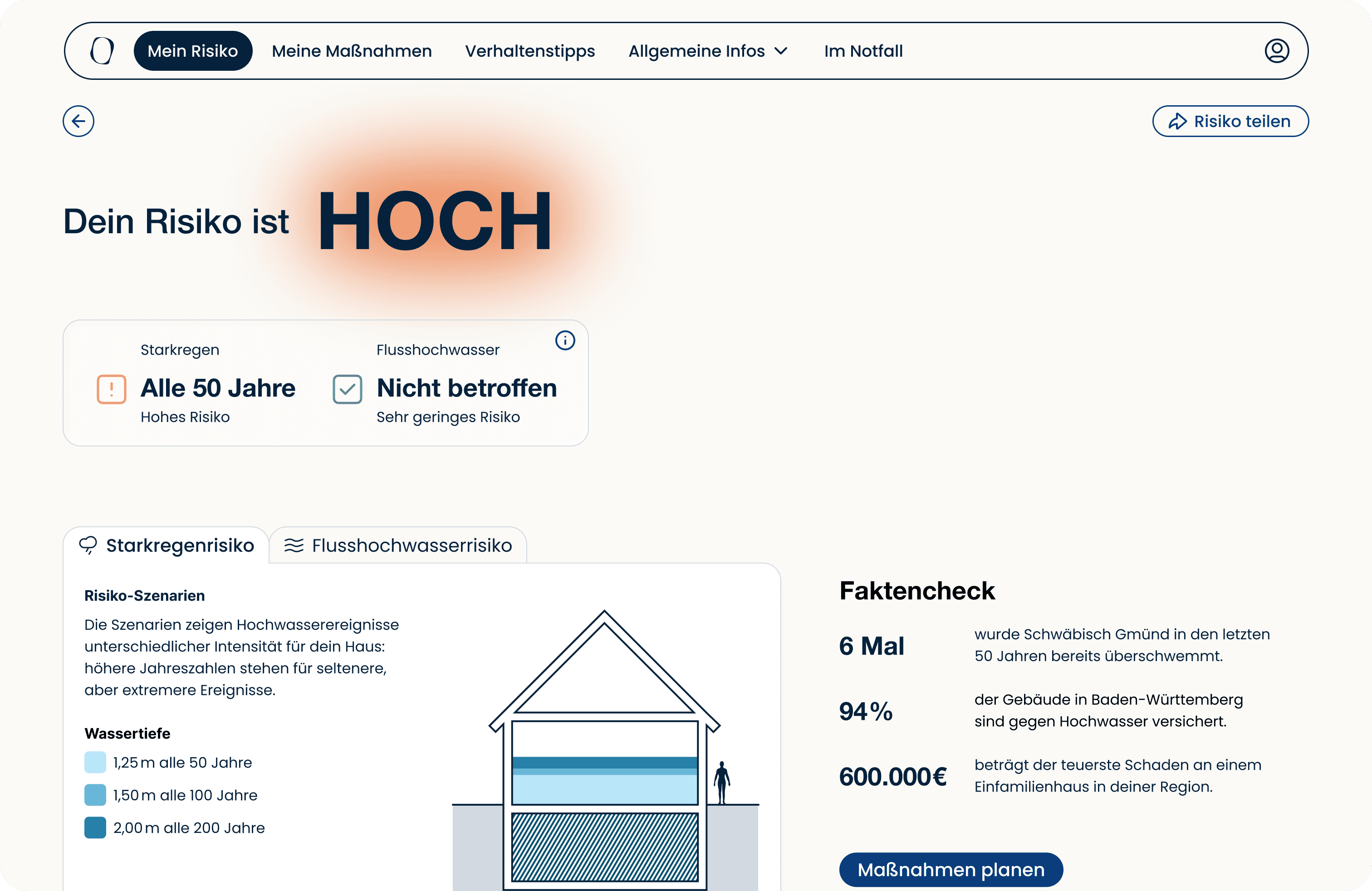
After entering their address, users receive an immediate risk analysis. To make abstract water levels understandable, the user interface uses a human reference figure in front of a house model, providing an instinctive, intuitive sense of the physical danger.
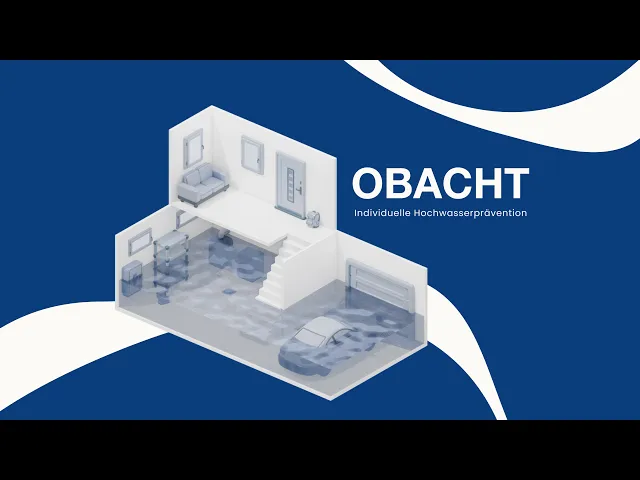
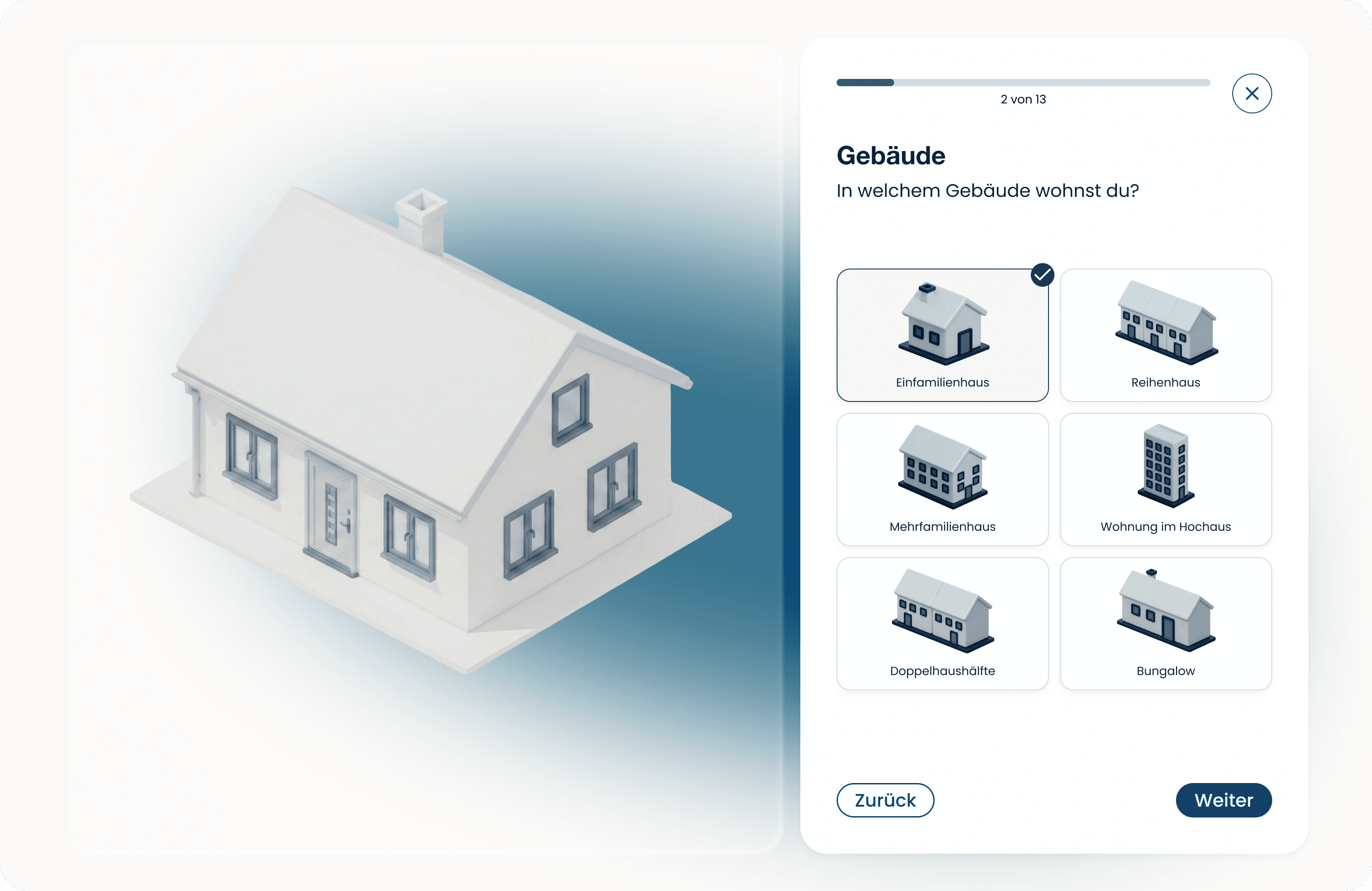
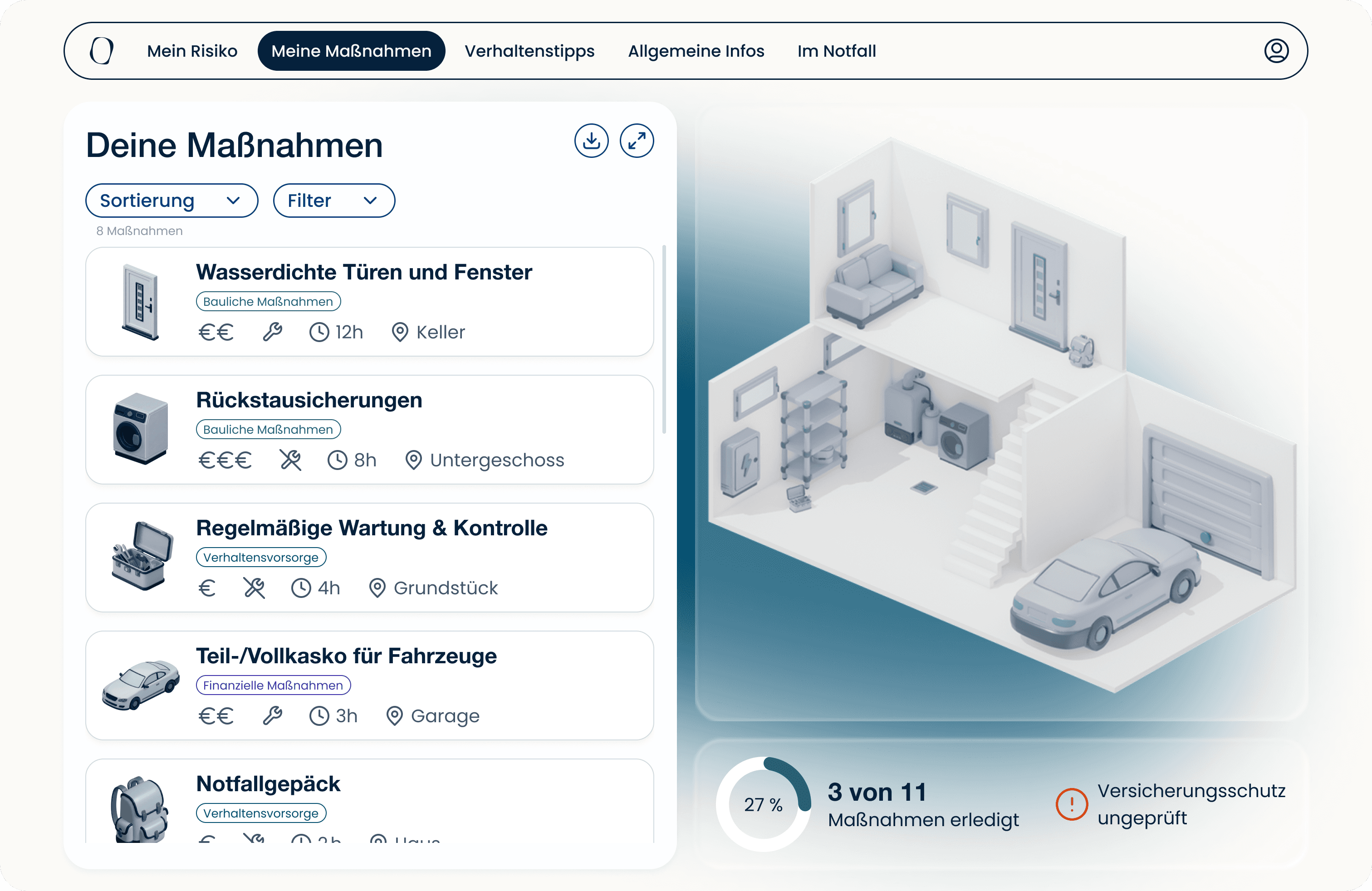
The Live Digital Twin: An interactive questionnaire creates an isometric 3D model of the user's specific house in real time. This visual representation simplifies complex architectural data and serves as a personalized anchor for all subsequent recommendations.
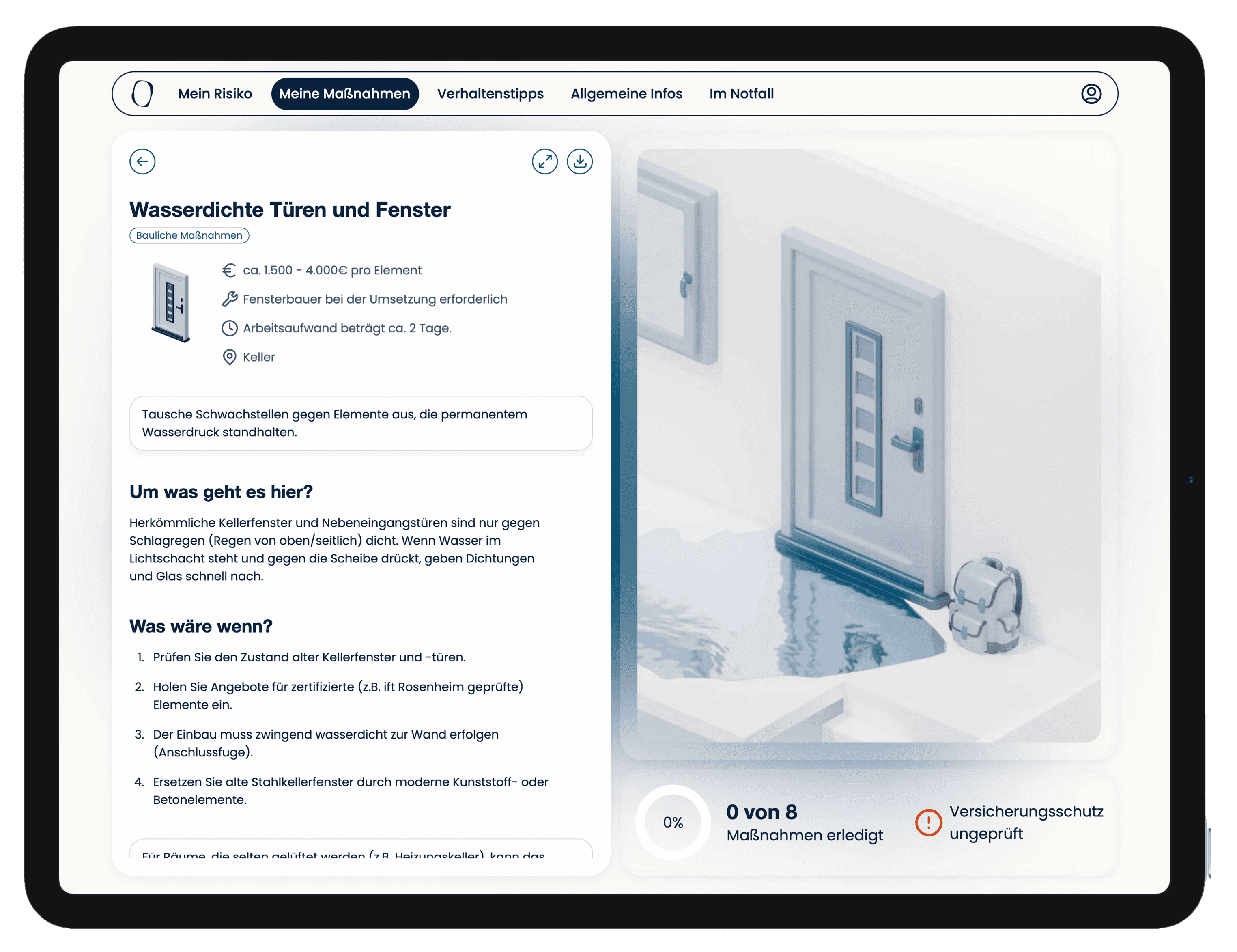
Prioritized action plan: Obacht creates a customized action plan categorized by structural, financial, and behavioral measures. To bridge the “knowledge-action gap,” contextual animations on the digital twin visualize potential damage, creating a compelling psychological incentive for proactive prevention.
Obacht successfully closes the “relevance gap” by transforming clinical risk maps into a personal mission. By replacing fear with concrete courses of action, the platform empowers risk groups, who are often denied access to traditional insurance, to take control of their own safety. The result is a scalable solution that reduces the long-term costs of disasters and improves the climate resilience of the entire community.